
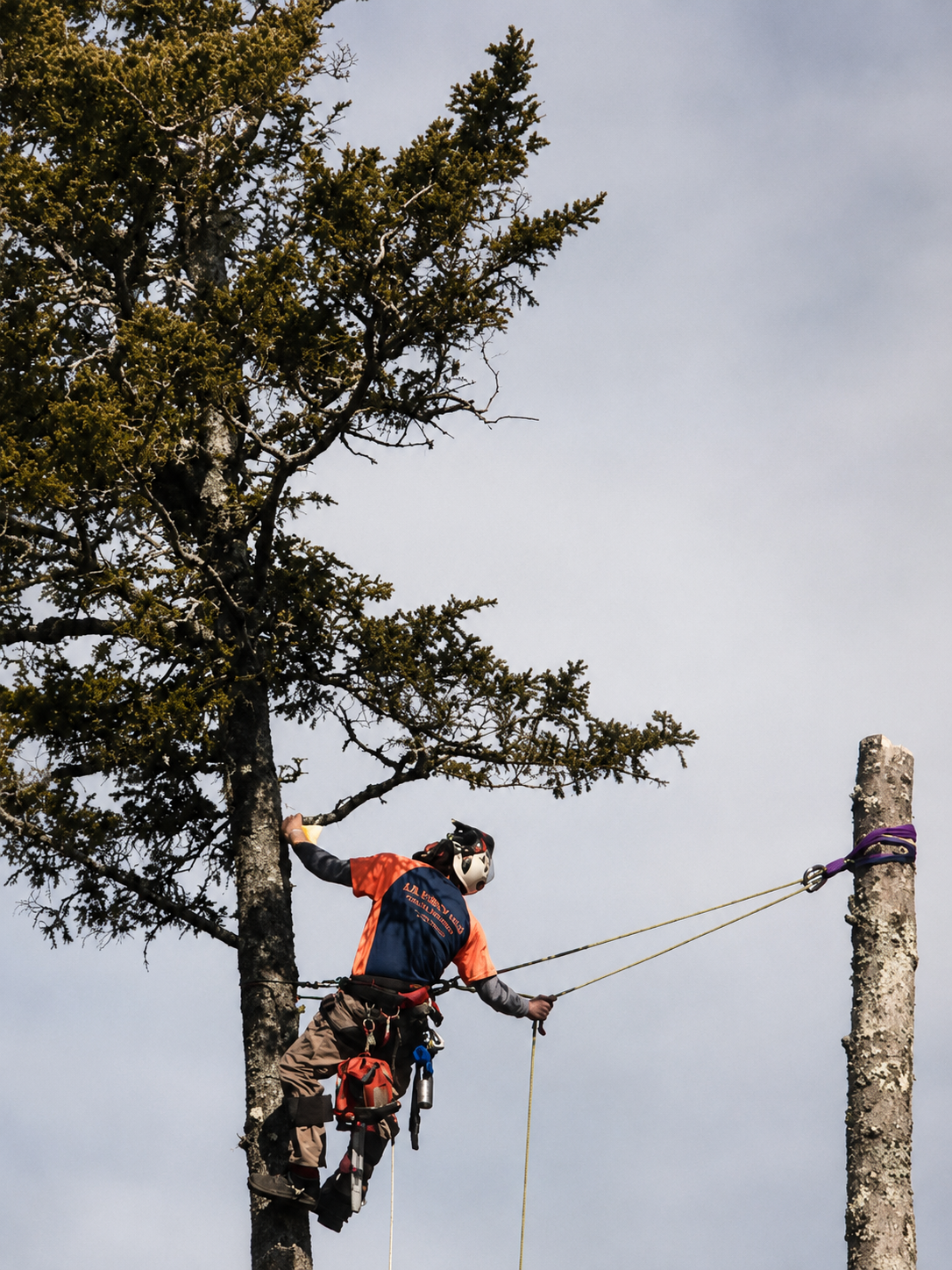
Start with the sightline, not the chainsaw
A useful view cut begins by standing where the view matters: a porch, living room, lawn, driveway or upper floor. From there, homeowner and arborist can identify which trunks, tops or branches interrupt the sightline and which trees provide privacy, shade or a natural frame worth preserving.
That conversation helps avoid unnecessary removal. In some cases, selective limb reduction or pruning can make a meaningful difference. In others, removing a particular tree may be the practical choice. The plan should reflect the property rather than a fixed formula.
- Selective pruning to open water or landscape views
- Climbing access on difficult terrain
- Consideration for remaining tree health and structure
- Retention of useful screening and property character
- Phased work when a gradual approach makes sense
Why vista pruning is different from topping
Vista pruning is selective. The objective is not to flatten every tree to the same height or strip away the crown. Poorly placed heading cuts can create weak regrowth and leave a tree less attractive than before. A careful view cut focuses on specific branches, stems or trees that affect the desired opening.
Owen can explain what is realistic based on species, structure, access and the amount of live crown that would remain. When a proposed cut would be poor for the tree, he can discuss alternatives rather than hiding the tradeoff.
Plan for the view to keep changing
Trees grow and coastal vegetation fills back in. A good plan considers how the view will look not just immediately after the work, but as new growth develops. Some properties benefit from lighter recurring pruning; others are better served by a more substantial first phase followed by occasional maintenance.
Call or text Owen at (207) 812-6657 for a free estimate. Walking the property together is the best way to identify the view you want and the trees you want to keep.
Frequently Asked Questions
What is the difference between a view cut and vista pruning?
Both terms describe selective tree work intended to improve a sightline. The exact method may include pruning individual limbs, reducing selected stems or removing a specific tree.
Can a view be improved without removing every tree?
Often, yes. The best option depends on the trees and the sightline, but selective work can preserve screening and character while opening a view.